
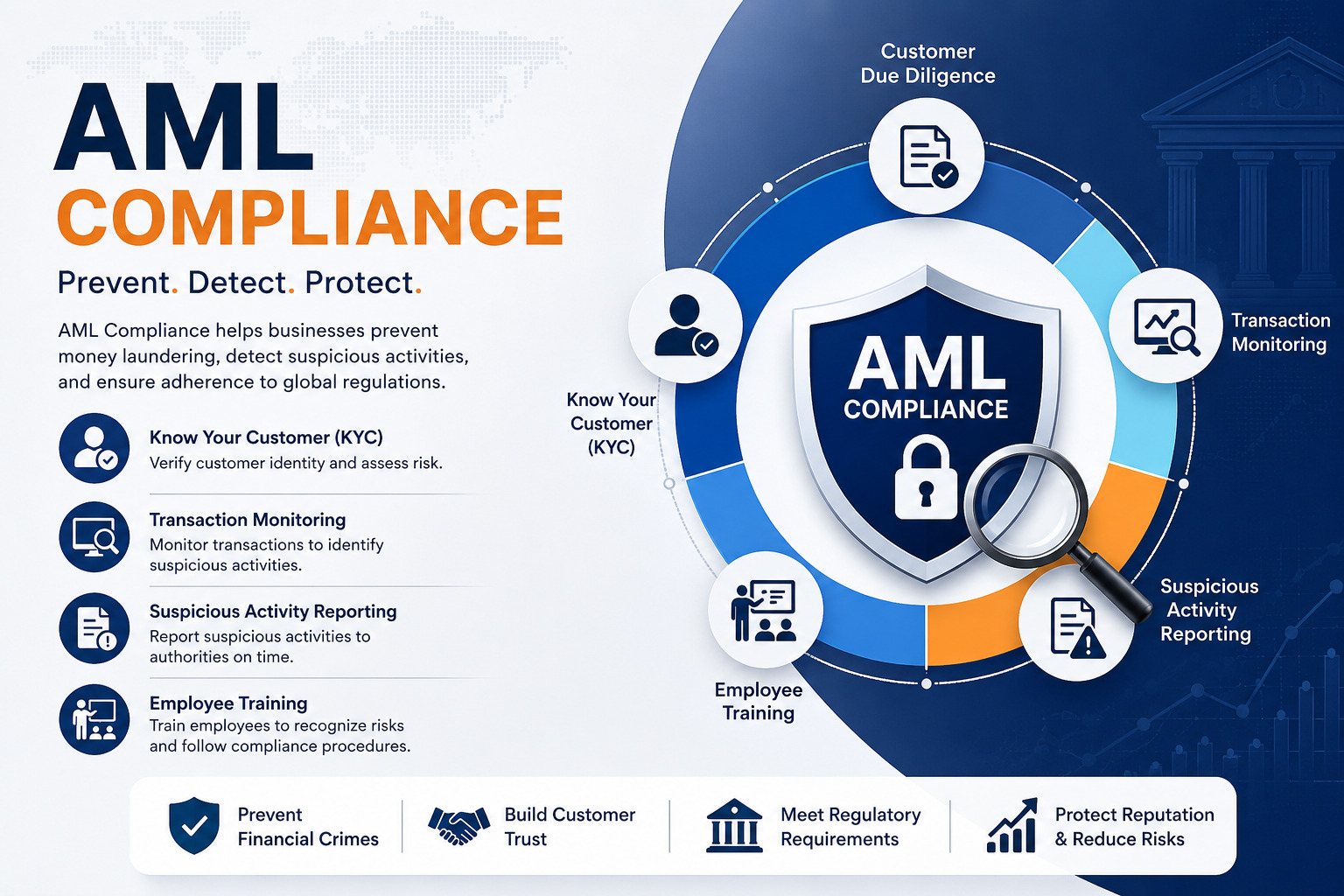
Anti-Money Laundering (AML) compliance is an essential part of the financial and regulatory framework that helps organizations prevent, detect, and report suspicious financial activities. As financial crimes continue to evolve, businesses across banking, insurance, fintech, real estate, and other sectors are required to implement effective AML compliance programs to protect their operations and maintain regulatory standards.
What is AML Compliance?
AML compliance refers to the policies, procedures, and controls that organizations implement to prevent money laundering and other financial crimes. Money laundering is the process of disguising illegally obtained funds as legitimate income. Criminals often use complex transactions, shell companies, and multiple accounts to hide the origin of illicit funds.
AML compliance ensures that businesses can identify suspicious transactions, verify customer identities, monitor financial activities, and report unusual behavior to the relevant authorities.
Why AML Compliance Matters
AML compliance is not only a legal obligation but also a critical business requirement. Organizations that fail to comply with AML regulations may face substantial fines, legal penalties, reputational damage, and operational restrictions.
Some key benefits of AML compliance include:
- Preventing financial crimes and fraud
- Enhancing customer trust and confidence
- Meeting regulatory requirements
- Protecting organizational reputation
- Reducing financial and operational risks
A strong AML compliance framework helps businesses maintain transparency and integrity while contributing to a safer financial ecosystem.
Key Components of AML Compliance
1. Customer Due Diligence (CDD)
Customer Due Diligence is the process of verifying a customer’s identity before establishing a business relationship. Organizations collect and verify information such as identification documents, addresses, and business details to assess the customer’s risk profile.
2. Know Your Customer (KYC)
Know Your Customer (KYC) procedures are a fundamental part of AML compliance. KYC helps organizations understand who their customers are and identify potential risks associated with them.
3. Transaction Monitoring
Businesses must continuously monitor customer transactions to detect unusual or suspicious activities. Automated monitoring systems can identify patterns that may indicate money laundering, terrorist financing, or fraud.
4. Suspicious Activity Reporting
When suspicious transactions are identified, organizations are required to report them to the appropriate regulatory authorities. Timely reporting helps law enforcement agencies investigate and prevent financial crimes.
5. Employee Training
Regular AML training ensures that employees understand regulatory requirements, recognize warning signs, and follow compliance procedures effectively. Well-trained staff play a crucial role in identifying and reporting suspicious activities.
Common AML Compliance Challenges
Organizations often face several challenges when implementing AML compliance programs. These may include evolving regulations, increasing transaction volumes, limited resources, and sophisticated financial crime techniques.
Additionally, global businesses must comply with regulations across multiple jurisdictions, making compliance management more complex. To address these challenges, many organizations use advanced technologies such as artificial intelligence, machine learning, and automated monitoring tools.
The Future of AML Compliance
Regulators worldwide continue to strengthen AML requirements, making it essential for organizations to maintain updated compliance programs. Businesses that invest in strong AML frameworks are better positioned to manage risks, avoid penalties, and build long-term trust with customers and stakeholders.
Conclusion
AML compliance plays a vital role in protecting businesses and financial systems from money laundering and related financial crimes. Through effective customer due diligence, transaction monitoring, employee training, and regulatory reporting, organizations can reduce risks and maintain compliance with evolving regulations. As financial crime threats continue to grow, a proactive and technology-driven AML compliance strategy is essential for sustainable business success.
