
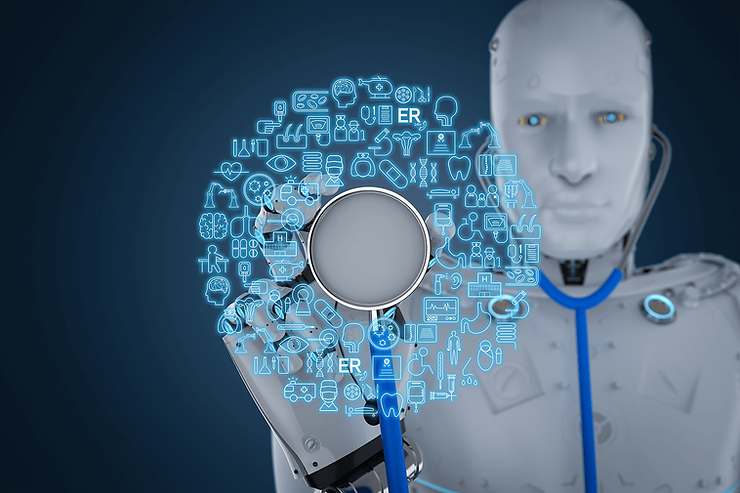
The Algorithmic Pulse: How AI-Powered Telemedicine is Bridging China’s Great Divide
In the vast, rugged stretches of Northwest China, where the Gobi Desert meets the Qilian Mountains, the distance between a patient and a specialist has historically been measured in days of travel. For millions living in these remote corridors, quality healthcare was often a luxury of geography. However, the rise of AI-powered telemedicine platforms, led by titans such as Ping An Health, is fundamentally rewriting this narrative. By deploying sophisticated algorithms to provide 24/7 consultation, these platforms are ensuring that a resident in a rural outpost receives the same diagnostic rigor as someone in the heart of Shanghai.
At the core of this revolution is the sheer scale of the digital infrastructure. Ping An Health now serves approximately 373 million registered users, a figure that underscores the massive shift toward „cloud-based“ medicine. These platforms do not merely act as video conferencing tools; they function as intelligent intermediaries. Through advanced natural language processing and machine learning, the AI mimics the reasoning of human specialists. When a patient uploads lab results or describes symptoms, the system cross-references the data against millions of historical clinical cases. This „AI Doctor“ provides a preliminary triaging process that identifies red flags with superhuman speed, allowing human physicians to focus their expertise on the most complex cases.
The impact in the Northwest is particularly profound. In regions where the ratio of doctors to citizens is critically low, AI fills the void by interpreting complex diagnostics—such as CT scans and blood panels—that would otherwise require a trip to a provincial capital. By automating the interpretation of routine lab results, the technology overcomes the physical barriers of the terrain. A farmer in a mountain village can now receive a sophisticated analysis of their chronic condition via a smartphone, bypassing the need for arduous travel. This democratization of data ensures that early intervention is possible, preventing manageable ailments from escalating into life-threatening crises.
Furthermore, the 24/7 nature of these platforms addresses the temporal barriers of traditional medicine. Illness does not adhere to office hours, and in isolated areas, an emergency at midnight can be fatal without immediate guidance. The AI’s ability to provide instant, reasoned consultations provides a critical safety net. While the technology is designed to augment rather rebecca singson md than replace human doctors, its ability to „mimic specialist reasoning“ provides a level of consistency in care that was previously impossible to scale. As China continues to integrate AI into its national health strategy, the „Great Divide“ is closing. The algorithm has become the new bridge, proving that in the digital age, your pulse can be monitored from a thousand miles away with the precision of a bedside visit.