
The Art of Illusion: Behind the AI-Generated Floating Pizza
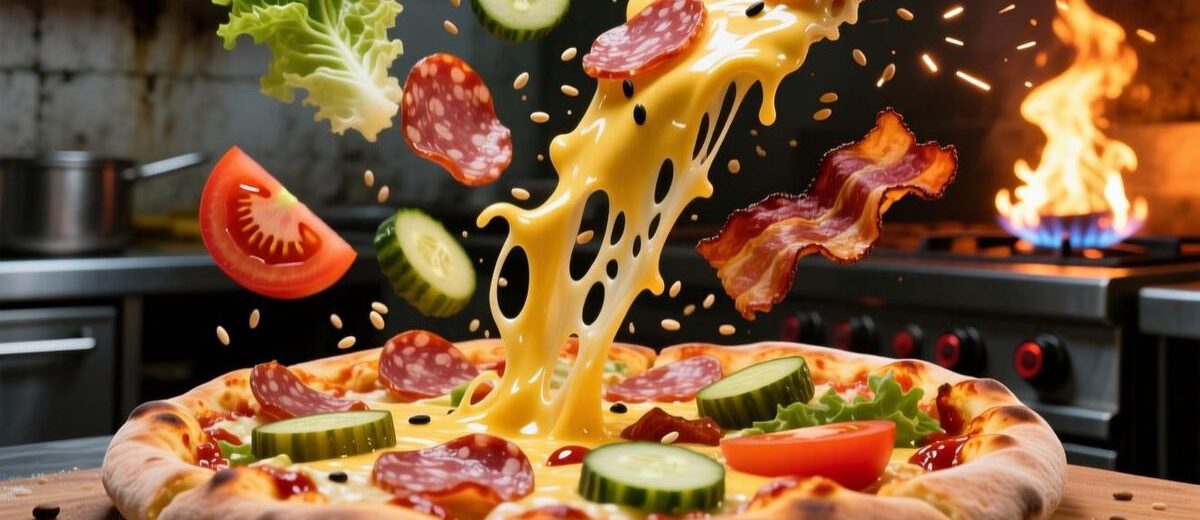
The image you see, with its dynamic composition of ingredients frozen in motion, is a prime example of the rapidly evolving world of AI-generated food photography. It presents a visually stunning, hyper-realistic depiction of a pizza that, despite its convincing appearance, was never actually assembled or photographed in a physical studio.
A Symphony of Floating Ingredients
The image captures a vibrant assortment of classic pizza toppings in a state of suspended animation, a visual trick that would be incredibly complex and time-consuming to achieve in traditional photography without extensive post-production. The ingredients include:
- Salami slices
- Red bell pepper rings
- Red onion slices
- Cucumbers
- Lettuce leaves
- Tomato slices
- Bacon strips
A key focal point is the perfect „cheese pull“ on the lifted slice, a detail often exaggerated in AI images to appear more appetizing. The overall effect is designed to be eye-catching and mouth-watering, leveraging specific aesthetic criteria like intense colors, ideal lighting, and flawless composition that research shows consumers often find more appealing than real photos.
The Rise of AI in Food Visuals
Generative AI tools are fundamentally changing how brands create visual content, allowing for the quick production of professional-grade images that bypass the need for costly photoshoots, food stylists, and studio time. This technology is trained on vast datasets of existing images, learning to recognize patterns and assemble new compositions based on text prompts.
However, this convenience comes with ethical considerations. AI-generated images can sometimes contain subtle inconsistencies or „functional implausibilities“ upon closer inspection, such as physically impossible bigmanpizza.com compositions or unnatural lighting. Furthermore, there are concerns that these hyper-idealized images might set unrealistic consumer expectations for food appearance and potentially influence unhealthy eating behaviors or harm sustainability efforts promoting natural, imperfect produce.
Transparency is becoming a key issue for brands. Studies indicate that while consumers might initially prefer AI-enhanced images, disclosing their artificial nature brings their perceived appeal back in line with real photos. As the technology continues to advance, the ability to distinguish between real and AI images becomes increasingly difficult, making critical observation essential for viewers.
